
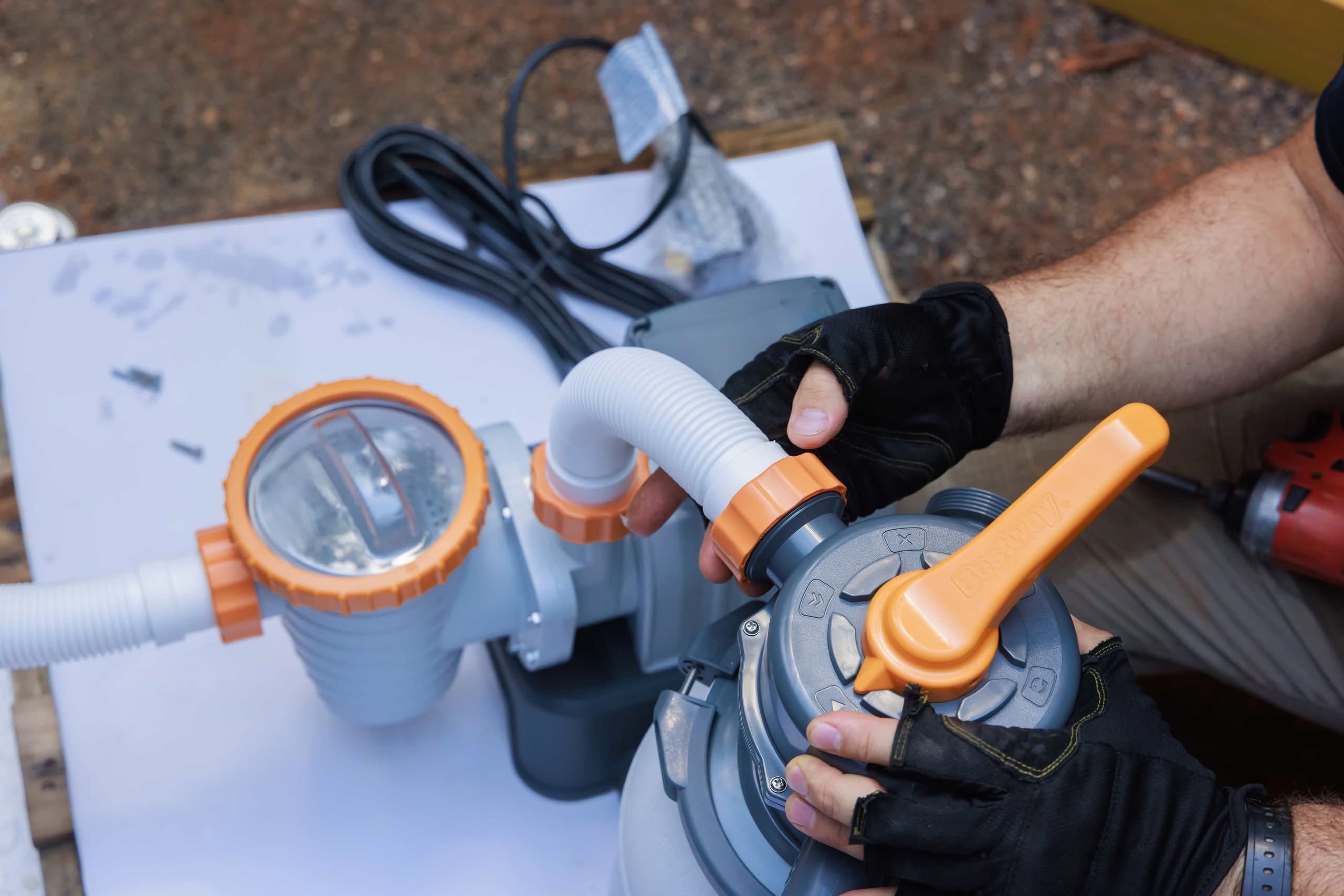
How a Pool Pump Upgrade in The Villages Slashes Your Summer Electric Bill
Key Takeaways: Variable-Speed Pool Pump Upgrades
Immediate Savings: Swapping an old single-speed pump for a modern model can reduce your pool’s energy consumption by up to 80%.
Rapid ROI: Most homeowners completely recoup their initial capital investment through utility savings within 12 to 18 months.
Code Compliance: Professional installation is required to maintain manufacturer warranties and meet local Florida electrical codes.
Whisper-Quiet: Modern permanent magnet motors operate at incredibly low decibel levels, eliminating noisy backyard hums.
If you live in Central Florida, you know that August brings some of the most intense heat of the year. While we rely on our backyard pools to keep us cool, your pool equipment might be working overtime behind the scenes. Have you noticed a sudden jump in your home energy expenses? If so, investing in variable-speed pool pump upgrades The Villages residents trust is the single most effective way to reclaim control over your utility bills while maintaining a pristine, crystal-clear swimming pool.
Many homeowners are shocked to discover that a traditional single-speed pool pump is often the second-largest consumer of electricity in their household, trailing only the air conditioning system. Because these older units operate at a constant, high-horsepower rate, they consume massive amounts of energy, even when performing simple tasks like basic filtration.
By upgrading to a modern variable-speed system, you can adjust the flow rate to match your pool’s specific needs, yielding dramatic, long-term savings.
Table of Contents
The Niche Challenge: August Electricity in The Villages
How Traditional Single-Speed Pumps Drain Your Wallet
The Science Behind Variable-Speed Upgrades
Real Financial Return: How Much Can You Save?
The Financial Risks of a DIY Installation
The Physical Hazards of DIY Equipment Swaps
What to Expect During a Professional Installation
Frequently Asked Questions
During the peak of summer, regional utility providers face maximum demand. The combination of triple-digit heat indexes and non-stop air conditioning forces power grids to work at peak capacity. For residents of Central Florida, this often translates to tier-based pricing structures where the more energy you use, the more you pay per kilowatt-hour (kWh).
To keep your water clean and prevent algae blooms during rainy Florida afternoons, your filtration system needs to run for at least 8 to 10 hours daily. If you are running an outdated, single-speed pump during these peak billing hours, you are essentially pouring money down the drain. Implementing variable-speed pool pump upgrades in The Villages allows you to run your filtration cycle at a lower, incredibly efficient speed over a longer period. This keeps your pool sparkling clean without pushing your household into a higher utility pricing bracket.
To understand why older pumps are so inefficient, it helps to look at how they operate. A single-speed pump has only two settings: completely on or completely off.
When it is turned on, it runs at its maximum speed (typically around 3,450 RPM). This high speed is necessary for heavy-duty tasks like backwashing a filter or vacuuming the pool, but it is complete overkill for daily water circulation and filtration.
Running a pool pump at maximum speed all day is equivalent to driving your car with the gas pedal pressed flat to the floorboard at all times. It places immense wear and tear on the internal motor components, generates excessive heat, and consumes far more power than necessary. Furthermore, high-speed circulation forces water through your filter at high pressure, which can actually reduce filtration quality by pushing tiny debris particles straight through the filter medium.
The magic behind modern variable-speed upgrades lies in a physical concept known as the Pump Affinity Laws. These laws dictate that the power consumed by a centrifugal pump is proportional to the cube of its shaft speed. In simpler terms, if you cut the motor speed in half, you do not just reduce the power consumption by half—you actually reduce it by a staggering seven-eighths!
Permanent Magnet Motors
Unlike older induction motors, variable-speed pumps utilize permanent magnet motors (similar to those used in hybrid cars). These motors are vastly more efficient and run significantly cooler.
Customizable Speeds
You can program specific speeds for different tasks. For example, you can set a low speed (1,500 RPM) for quiet, ultra-efficient daily filtration, a medium speed (2,400 RPM) for running your salt chlorine generator, and a high speed (3,100 RPM) for running water features.
Whisper-Quiet Operation
At lower speeds, variable-speed pumps operate so quietly that you often have to stand right next to them to confirm they are running. This is a massive upgrade over the loud, disruptive hum of older single-speed motors.
Let us break down the actual math. The average single-speed pool pump draws approximately 1.5 to 2.0 kilowatts of power. Running this pump for 10 hours a day at an average Florida utility rate of $0.15 per kWh costs roughly $2.25 to $3.00 per day. Over the course of a month, that is $67 to $90 just to run your pool pump.
In contrast, a variable-speed pump running at a low filtration speed draws as little as 0.1 to 0.2 kilowatts. Even if you run it for 16 hours to ensure superior water turnover, the daily cost drops to about $0.35 to $0.48. That brings your monthly operating cost down to just over $10 to $15.
| Pump Type | Average Daily Run Time | Est. Monthly Cost (August) | Est. Annual Operating Cost |
| Traditional Single-Speed | 10 Hours | $75.00 – $90.00 | $900.00 |
| Variable-Speed Upgrade | 16 Hours (Low Speed) | $12.00 – $15.00 | $150.00 |
| Your Monthly Savings | — | $63.00 – $75.00 | $750.00+ Saved |
Over the typical lifespan of a pool pump, these savings easily add up to thousands of dollars. In most cases, the initial investment for variable-speed pool pump upgrades The Villages residents make pays for itself in utility savings alone within the first 12 to 18 months of operation.
To explore further technical resources on pool energy efficiency, check out the comprehensive Department of Energy Pool Pump Standards or review local energy saving recommendations provided by the ENERGY STAR® pool pump certification guide.
With the rise of online video tutorials, many homeowners are tempted to purchase equipment online and attempt a DIY installation. However, when it comes to sophisticated pool technology, DIY is highly discouraged.
One of the biggest pitfalls of self-installation is the instant forfeiture of product protections. Major pool equipment manufacturers explicitly state in their warranty terms that their product warranties are only valid if the equipment is installed by a licensed professional. If you attempt a DIY installation and make a minor mistake that damages the motor or the internal computer interface, you will be left with a completely useless piece of machinery and zero warranty coverage. A professional installation protects your financial investment from day one.
Beyond the financial risks, pool equipment pads present highly hazardous conditions for amateurs. You are working with high-voltage electricity (often 220-240 volts) sitting directly alongside high-pressure water plumbing lines.
Electrical and Bonding Dangers
A single loose wire, improper grounding, or a failed waterproof seal can lead to catastrophic electrical shorts, equipment damage, or lethal electrical shocks. Furthermore, Florida building codes require strict “equipotential bonding” around pool equipment pads to prevent stray voltage from entering your pool water. Amateurs lack the heavy-duty diagnostic tools required to verify this safety net.
Hydraulic Dynamics and Pressure Seals
Connecting a new pump requires precise calculations of your pool’s total dynamic head (flow resistance). If the plumbing is misaligned or restricted, it will starve the pump of water, causing it to overheat and fail prematurely. Professional installers understand how to optimize pipe sweeps and unions to ensure flawless hydraulic efficiency.

When you partner with a reputable, veteran-owned local service provider like Trident Pool Solutions, the entire upgrade process is seamless, structured, and completely stress-free. If you are looking for top-tier variable speed pool pumps in Central FL, our team of certified technicians handles every aspect of the project to guarantee safety, code compliance, and optimal performance.
Comprehensive Site Inspection: We evaluate your current pool volume, plumbing diameter, and electrical service panel capacity to select the ideal variable-speed pump model.
Safe Demolition & Environmental Disposal: We safely disconnect the high-voltage electrical lines, cut away outdated PVC plumbing, and responsibly haul away your old single-speed pump.
Precision Plumbing Adaptation: We replumb the suction and return lines using high-schedule PVC, heavy-duty unions, and sweeping elbows to maximize water flow.
Electrical Wiring & Grounding Compliance: We wire the new permanent magnet motor to National Electrical Code (NEC) standards, ensuring proper bonding to protect your family.
Custom Automation Programming: Our experts program the pump’s internal computer, setting up custom speed schedules tailored to your pool’s demands.
Whether you need a dedicated VSP pump Florida guide or immediate installation assistance, professional support ensures your system runs flawlessly from day one.
How long do variable-speed pool pumps typically last?
When professionally installed and properly maintained, high-quality variable-speed pumps generally last between 8 to 12 years. Because they run cooler and experience less mechanical stress than single-speed motors, their internal components suffer far less wear over time.
Are there any utility rebates available for variable-speed upgrades?
Yes! Many regional electric cooperatives and major utility companies in Florida offer significant cash rebates for homeowners who upgrade from a single-speed pump to an ENERGY STAR® certified variable-speed model. Our team at Trident Pool Solutions can help you identify and apply for these local savings.
Do I need to run a variable-speed pump 24 hours a day?
While you do not absolutely have to run it 24/7, doing so at an ultra-low speed is highly recommended. Running your pump continuously at low RPMs keeps your water circulating non-stop, preventing debris from settling and completely eliminating chemical stagnation, all while using less energy than a single-speed pump uses in just two hours.
Trident Pool Solutions is a veteran-owned and operated pool equipment specialist serving Central Florida. Ready to lower your monthly utility bills? Contact us today to schedule your professional variable-speed pool pump upgrade.