
Pool Water Loss in July: The Ultimate Ocala Guide to Evaporation vs Leaks
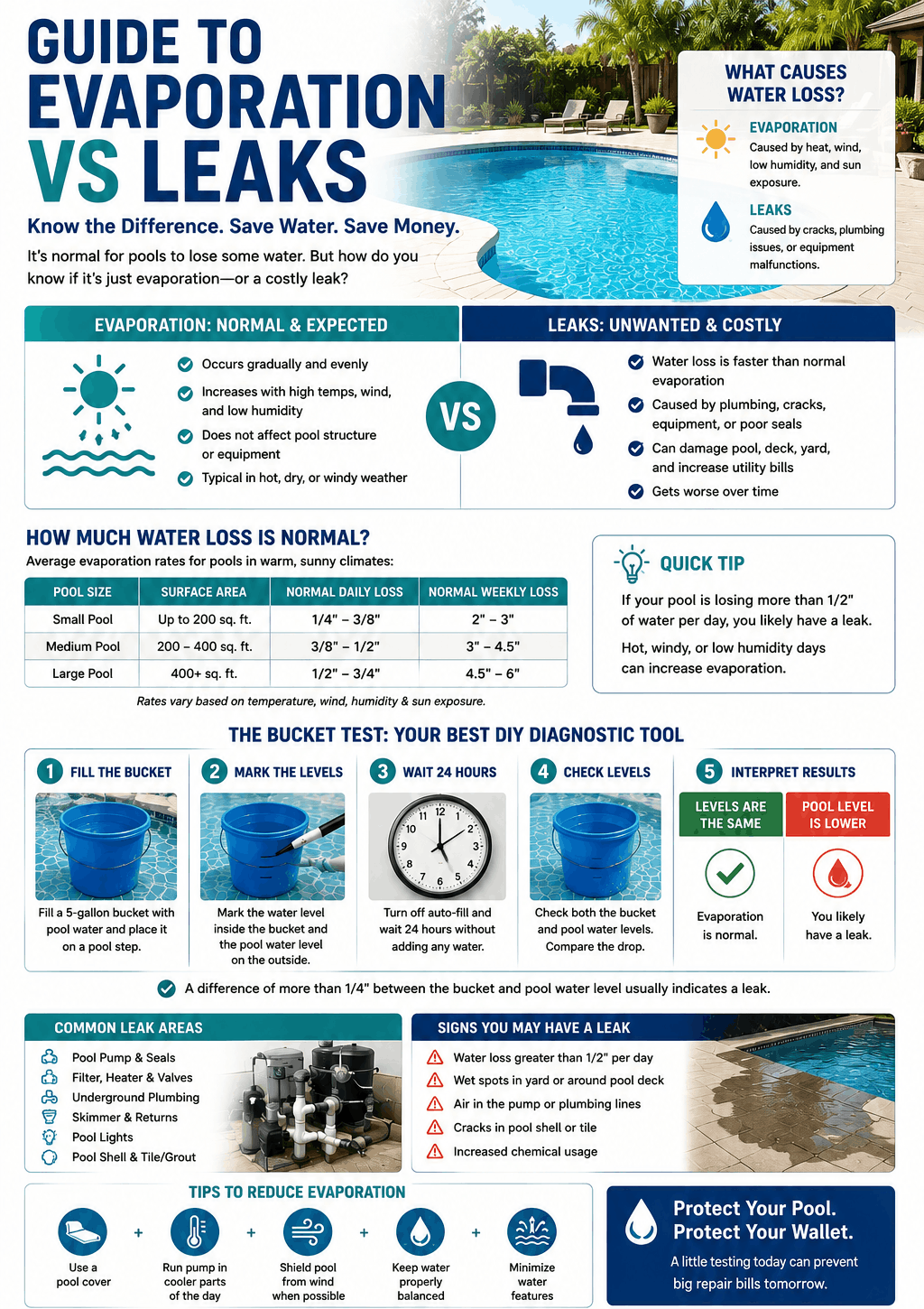
Experiencing unexpected pool water loss in July is an incredibly common issue for homeowners across Ocala and the broader Marion County region. During the peak of the Florida summer, a standard uncovered swimming pool naturally loses between 1/4 and 1/2 inch of water per day due to atmospheric evaporation. However, if your water line drops more than half an inch within a single 24-hour window, you are likely dealing with a structural or plumbing leak. Catching these structural deficiencies early prevents expensive chemical waste, structural shifting, and localized foundation erosion.
The blistering July heat in Ocala, Florida, can make your backyard swimming pool feel like an absolute paradise. However, when you notice the water level dropping day after day, that paradise can quickly transform into a source of major anxiety. You find yourself standing by the edge of your pool deck, wondering if you are looking at standard climate evaporation or a serious plumbing failure. Managing this sudden fluid drop is a stressful challenge that requires clear, data-driven diagnostic steps.
📌 Key Takeaways
Normal Evaporation Limits: Healthy pools lose roughly 1.5 to 3 inches of water weekly during a typical Central Florida July.
The Overnight Thermal Gap: Evaporation peaks at night when hot pool water meets rapidly cooling summer air.
The Bucket Test Rule: This simple 24-to-48-hour diagnostic test is the absolute best way to separate evaporation from structural leaks.
Plumbing Red Flags: Persistent air bubbles in your return jets point directly to a suction-side plumbing line failure.
Dangers of DIY Repairs: Blindly injecting retail sealants can clog lines and permanently ruin high-end variable-speed pump impellers.
Table of Contents
The Summer Baseline: What is Normal Water Loss?
Environmental Drivers: Why the Ocala Heat Accelerates Evaporation
Evaporation vs. Leaks: Red Flags of Structural Water Loss
The Bucket Test: Diagnosing Your Pool System at Home
The Hidden Structural Risks of DIY Leak Repairs
Why Professional Acoustic Leak Detection Wins Every Time
Protect Your Marion County Pool Investment
The Summer Baseline: What is Normal Water Loss?
Quick Answer: Normal evaporation causes a daily drop of 1/4 to 1/2 inch. Any water line drop that exceeds 3.5 inches per week points directly to an active structural or plumbing leak.
To accurately evaluate your backyard system, you must first understand what the laws of physics demand during a hot Central Florida summer. On an average day, an open swimming pool will naturally lose a measurable fraction of an inch strictly to the atmosphere. Over a standard July week, this baseline translates to roughly 1.5 to 3 inches of total water loss.
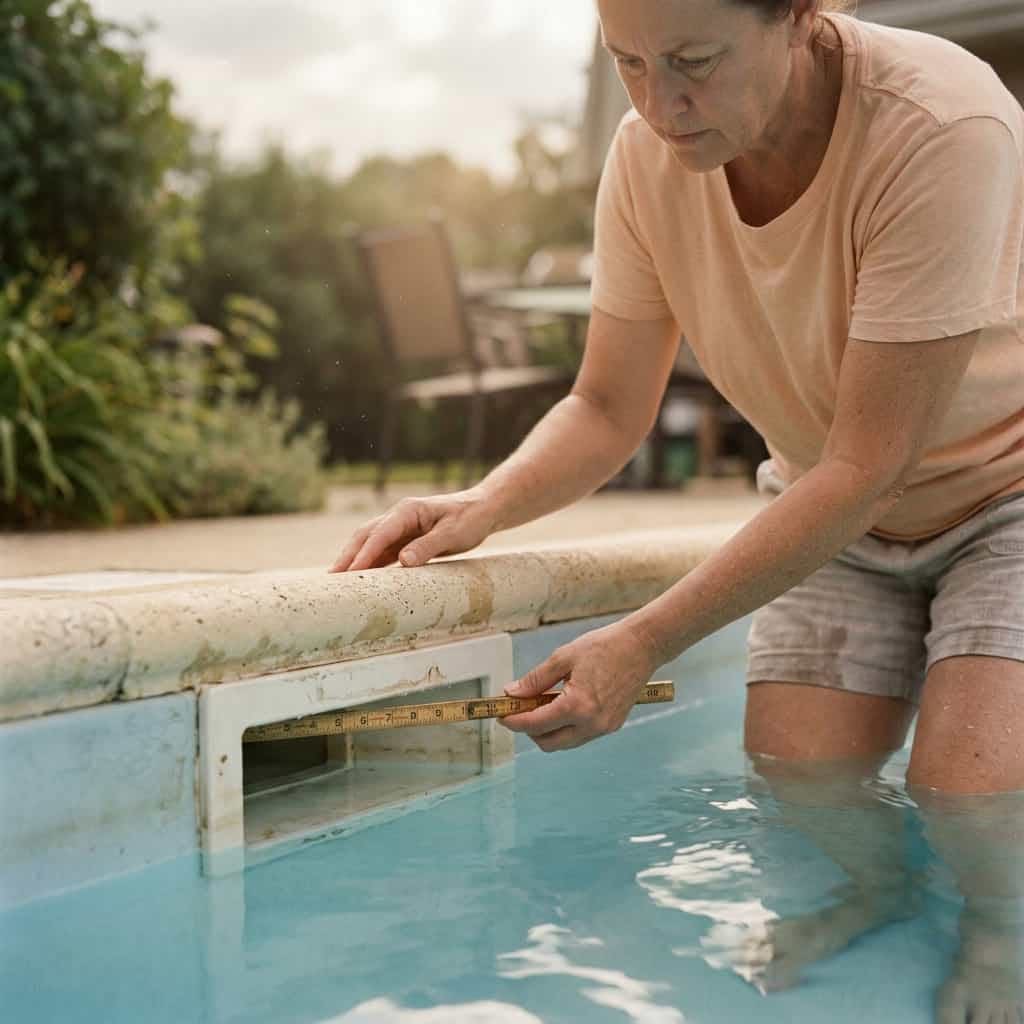
While a fraction of an inch sounds minor, the actual volume of water behind those measurements is staggering. To calculate the exact volumetric water loss in gallons, engineers utilize the following fluid equation:
Where V represents the total water volume lost in gallons, A is the pool’s surface area in square feet, $d$ is the water loss depth in inches, and 7.481 is the standard conversion factor from cubic feet to gallons. Let us look at how these daily baseline drops translate across common residential layouts:
| Pool Dimensions | Total Surface Area | Daily Water Loss (1/4″ Drop) | Weekly Water Loss (1.75″ Drop) |
| 12′ x 24′ (Small Layout) | 288 sq. ft. | ~45 Gallons | ~315 Gallons |
| 15′ x 30′ (Medium Layout) | 450 sq. ft. | ~70 Gallons | ~490 Gallons |
| 20′ x 40′ (Large Layout) | 800 sq. ft. | ~125 Gallons | ~875 Gallons |
If your pool matches these baseline numbers, your system is behaving precisely as expected under the intense summer sun. However, if your water line drops faster than half an inch in a single day, you have likely migrated into leak territory. Checking this baseline is an essential first step before scheduling professional leak detection services.
📊 Data Point: Local municipal water statistics show that an unchecked pool leak can waste over 3,000 gallons of treated water per month, significantly spiking household utility bills.
Environmental Drivers: Why the Ocala Heat Accelerates Evaporation
Quick Answer: Evaporation is driven by the temperature gap between hot pool water and cool night air, dropping humidity levels between summer storms, and high backyard wind exposure.
Ocala’s unique inland microclimate and geographic positioning create a perfect storm for accelerated pool water loss in July. Several critical environmental factors dictate the speed at which your water molecules escape into the air.
The Overlooked Thermal Gap
Evaporation rates are not driven entirely by high ambient daytime air temperatures. Instead, they are heavily dictated by the temperature differential between your pool water and the surrounding air. In July, Ocala regularly experiences daytime highs in the mid-90s, heating pool surfaces significantly.
When afternoon thunderstorms roll through or night falls, the air temperature drops rapidly while your pool water stays hot. This wide thermal gap causes evaporation rates to skyrocket overnight, which is why you often notice the most dramatic drops first thing in the morning.
[Hot Pool Water (88°F)] + [Chilled Night Air (74°F)] ──> Widened Thermal Gap ──> Spiked Overnight Evaporation
Relative Humidity Fluctuations
While Florida is famous for its oppressive humidity, summer weather patterns remain highly dynamic. High relative humidity acts as a natural brake on evaporation because the surrounding air is already saturated with moisture.
However, during long stretches of dry heat between tropical waves, local atmospheric moisture drops. When local relative humidity dips, the dry air acts like a sponge, aggressively pulling water vapor off the surface of your pool at up to double the standard rate.
Wind Exposure Across Open Landscapes
Wind speed is arguably the most overlooked catalyst for severe pool water loss. A gentle breeze blowing across an open backyard removes the boundary layer of saturated air directly above the pool surface, replacing it with drier air ready to absorb more water.
Homes located near open areas in Marion County, such as local golf courses or sprawling equestrian estates, experience significantly higher baseline water loss due to uninterrupted wind patterns.
💡 Expert Insight: Installing a solid solar blanket or structural pool cover when the pool is not in use can eliminate up to 95% of natural atmospheric evaporation losses.
Evaporation vs. Leaks: Red Flags of Structural Water Loss
Quick Answer: Look for physical red flags like isolated soggy patches of grass, shifting deck pavers, steady air bubbles in your return jets, and dropping chemical levels.
Because natural evaporation can look quite dramatic on a large pool, homeowners frequently struggle to spot an actual structural compromise. To protect your property, monitor your pool equipment pad and deck area for these distinct signs of a fluid leak:
Soggy Spots and Shifting Pavers: Evaporation disperses entirely into the sky as invisible vapor. If you notice pooling water, muddy patches, or unusually lush, bright green patches of grass on one side of your pool deck, water is traveling downward into the soil. Over time, this underground erosion will cause concrete decks to crack and interlocking pavers to settle unevenly.
Persistent Air Bubbles in the System: If you look through the clear lid of your pump basket or notice a steady stream of air bubbles firing out of your pool’s return jets, your filtration system is drawing air. This is a classic indicator of a leak on the suction side of your plumbing, typically located near the pool skimmers or the underground main drain lines.
Rapid Chemical Imbalance: While UV rays naturally degrade chlorine, a true leak forces a continuous influx of fresh, untreated tap water into the system via your auto-fill valve or manual hose. If you find your total alkalinity, calcium hardness, and stabilizer (cyanuric acid) levels plummeting week after week, you are likely draining treated water into the ground and diluting your remaining balance.
⚠️ Common Mistake: Homeowners often assume a chemical imbalance is simply caused by heavy bather loads, completely missing an active plumbing leak that is constantly diluting their pool water.
The Bucket Test: Diagnosing Your Pool System at Home
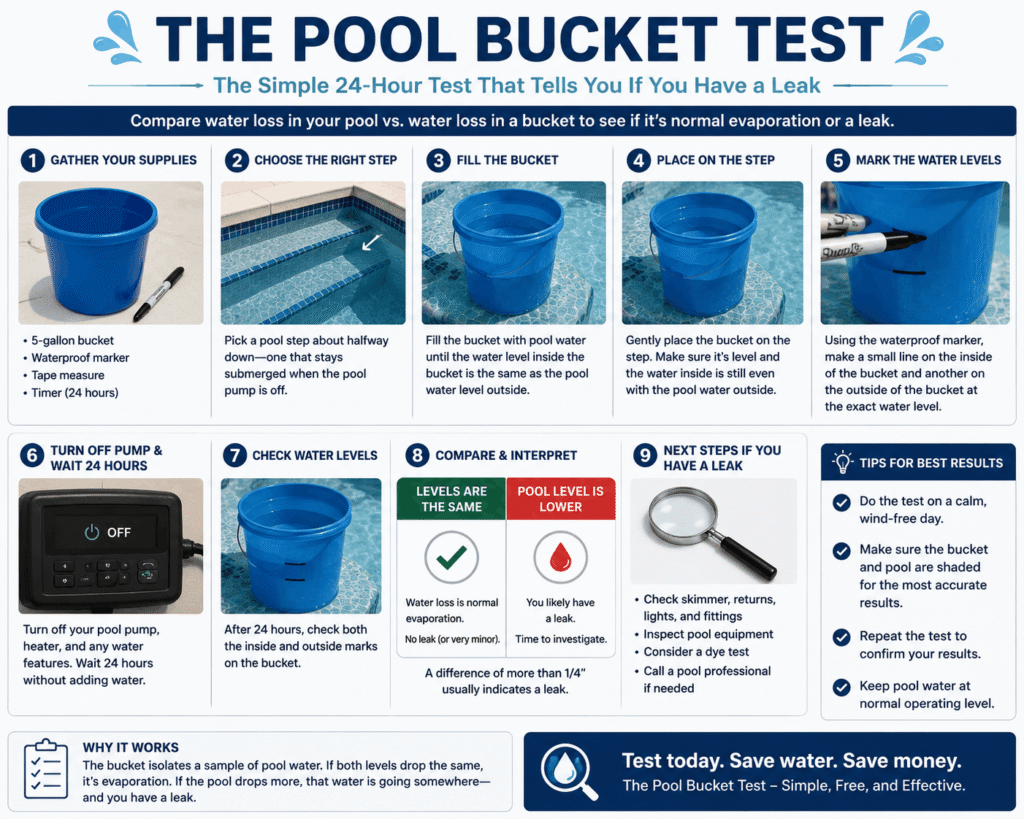
Quick Answer: Place a water-filled bucket on a pool step, mark the internal and external water levels, and compare the drops after 24 to 48 hours to isolate structural leaks from standard evaporation.
Before panic sets in, you can execute a straightforward diagnostic protocol known within the swimming pool industry as the Bucket Test. This test isolates a small control sample of water to determine if your loss is atmospheric or structural.
Step-by-Step Testing Protocol
To accurately determine what is causing your pool water loss in July, walk through these exact procedural steps:
Prep the System: Bring your pool water up to its normal operating level (usually halfway up the skimmer mouth). If your pool features an automated water auto-fill system, it must be completely turned off for the duration of this test.
Position the Control: Take a clean, 5-gallon plastic bucket and fill it with pool water until the water inside the bucket sits roughly one to two inches from the top rim.
Place the Bucket: Set the bucket securely on the first or second step of your pool. Submerging the lower portion of the bucket ensures that the water inside maintains the exact same temperature profile as the pool itself, neutralizing any thermal discrepancies.
Mark the Initial Levels: Using a waterproof marker or heavy-duty electrical tape, mark the exact water level on the inside of the bucket. Next, mark the exact pool water level on the outside of the bucket.
Wait 24 to 48 Hours: Leave the pool undisturbed. Ensure no one swims during this window, as splashing will completely invalidate your measurements. Ensure there are no major rainstorms during the testing period.
Measure the Variance: Check the marks exactly 24 or 48 hours later.
Interpreting Your Diagnostic Results
Identical Drop: If the water level inside the bucket and the pool water level outside have dropped by the exact same distance, your pool is structurally sound. The loss you are witnessing is entirely caused by Ocala’s intense heat and natural atmospheric evaporation.
Disproportionate Drop: If the pool water level outside the bucket has dropped noticeably lower than the water level inside the bucket, you have definitive proof of an active structural leak.
👉 Advanced Pro Tip: If your bucket test confirms a leak, run the test a second time with your pool pump turned completely off, and then a third time with the pump running continuously. If you lose significantly more water when the pump is active, the leak is located on the pressure side of your plumbing (the lines pushing water back to the pool). If the rate of loss remains identical whether the pump is on or off, the leak is likely within the pool shell itself or the gravity-fed main drain lines.
The Hidden Structural Risks of DIY Leak Repairs
Quick Answer: Superficial DIY patch kits and retail pipe sealants rarely solve the root issue. Incorrectly patching a pool can lead to massive underground soil voids, cracked shells, and clogged filtration lines.
When a leak is confirmed, many homeowners are tempted to turn to online videos, home improvement forums, or DIY patch kits to solve the problem. While taking a hands-on approach is admirable for basic landscape maintenance, attempting to repair a swimming pool leak yourself frequently leads to severe structural and financial consequences.
The Illusion of the “Simple Patch”
Many pool owners buy underwater epoxy or vinyl patch kits, assuming they can simply find a small crack in the plaster or a split liner and seal it up. Unfortunately, what looks like a minor hairline fracture on the surface is frequently a symptom of a much larger structural issue. Soils across Marion County are highly dynamic, blending heavy clays with unstable limestone sands. If a pool shell is actively shifting due to an underground water void, a superficial DIY patch will fail within days as the structure continues to move.
The Hidden Danger of Chemical Dye Kits
Another common DIY trap is purchasing commercial dye testing syringes to find leaks around skimmer throats, light niches, or return fittings. While dye testing is a legitimate diagnostic method, it requires pristine water conditions, perfectly calm air, and a highly trained eye to interpret subtle fluid currents. Amateurs frequently misinterpret where the dye is traveling, leading them to chip away at perfectly sound concrete or apply sealants to the wrong areas.
[Misinterpreted DIY Dye Test] ──> [Accidental Chipping of Sound Concrete] ──> [Compounded Structural Damage]
Blind Injections and Internal Pipe Damage
The most dangerous DIY attempts involve homeowners trying to fix suspected plumbing leaks by injecting expanding foams or commercial pipe sealants directly into their return or suction lines. Swimming pool plumbing systems are engineered to withstand precise pressure thresholds.
Injecting unverified consumer sealants can permanently clog filtration lines, coat the interior of expensive saltwater chlorinator cells, ruin variable-speed pump impellers, and completely destroy your pool heater’s delicate internal heat exchangers. A mistake here can easily turn a straightforward pipe repair into a complete yard excavation costing tens of thousands of dollars.
Why Professional Acoustic Leak Detection Wins Every Time
Quick Answer: Professional technicians deploy non-invasive, industrial-grade diagnostic gear to pinpoint the exact location of a leak without damaging your deck or landscaping.
Professional leak detection technicians do not rely on guesswork, superficial dye tests, or destructive digging. True specialists deploy a sophisticated array of non-invasive, industrial-grade diagnostic technologies to pinpoint the exact square inch of a failure without disrupting your landscaping.
Advanced Leak Detection Technologies
Acoustic Sonic Hydrophones: Highly sensitive underwater microphones listen deep within plumbing lines, through concrete decks, and underneath solid earth to isolate the distinct, high-frequency sound of pressurized water escaping a pipe.
Electronic Soil & Shell Profiling: Advanced electronic sensors can detect minute electrical currents escaping through microscopic punctures in vinyl liners or structural fissures in gunite shells, locating subterranean voids without removing an ounce of dirt.
Digital Pressure Testing: By isolating individual lines—including skimmers, main drains, spa returns, and solar heating loops—and tracking them with digital pressure transducers, professionals can verify the exact health of your underground plumbing grid in real-time.
Frequently Asked Questions
Why does pool water loss in July seem worse than in other summer months?
July features a perfect storm of high daytime temperatures, intense UV exposure, and dropping humidity levels between tropical waves. This widens the thermal gap between your heated pool water and the cooling night air, causing natural evaporation rates to peak overnight.
How can I tell if my Ocala pool water loss is from a leak or just evaporation?
The absolute best way to check is by running a standard 24-to-48-hour bucket test. If the water level in your pool drops faster than the water level inside the isolated bucket, your pool has an active structural or plumbing leak.
Can a pool leak cause my concrete deck or interlocking pavers to sink?
Yes, absolutely. When water escapes from an underground plumbing line or structural shell crack, it saturates the surrounding sandy soil. Over time, this moving water washes away the supporting ground, creating voids that cause concrete decks to crack and pavers to sink unevenly.
Will running my pool pump affect the rate of water loss from a leak?
Yes, running your pump increases the pressure within your return plumbing lines. If you notice your pool loses water significantly faster while the pump is turned on, the leak is almost certainly located on the pressure side of your filtration plumbing.
Can I use retail spray sealants to fix a leak inside my pool plumbing?
No, retail spray foams and pour-in pipe sealants should never be injected into pool plumbing lines. These products can permanently clog your filtration grids, ruin variable-speed pump impellers, coat salt chlorinator cells, and destroy internal heater exchangers.
Is professional leak detection non-destructive to my backyard landscaping?
Yes, modern professional leak detection relies on completely non-invasive technologies. Certified technicians use acoustic sonic hydrophones, electronic shell profiling, and digital pressure transducers to pinpoint leaks without digging up your yard or breaking your pool deck.
Protect Your Marion County Pool Investment
Your backyard swimming pool represents a massive financial investment and serves as a primary hub for family memories. Leaving a leak unchecked—or trying to patch it with sub-par DIY methods—endangers the structural integrity of your entire deck, wastes thousands of gallons of water, and ruins your water chemistry.
When your bucket test indicates that you are losing more than standard evaporation allows, it is time to bring in certified specialists who understand the unique soil conditions and pool construction styles of Marion County.
At Trident Pool Solutions, we provide local expertise combined with advanced tools to systematically resolve your issues. We don’t just guess where the problem is; we verify it. Protect your investment, restore your peace of mind, and make sure your only focus this summer is enjoying your pristine pool.