
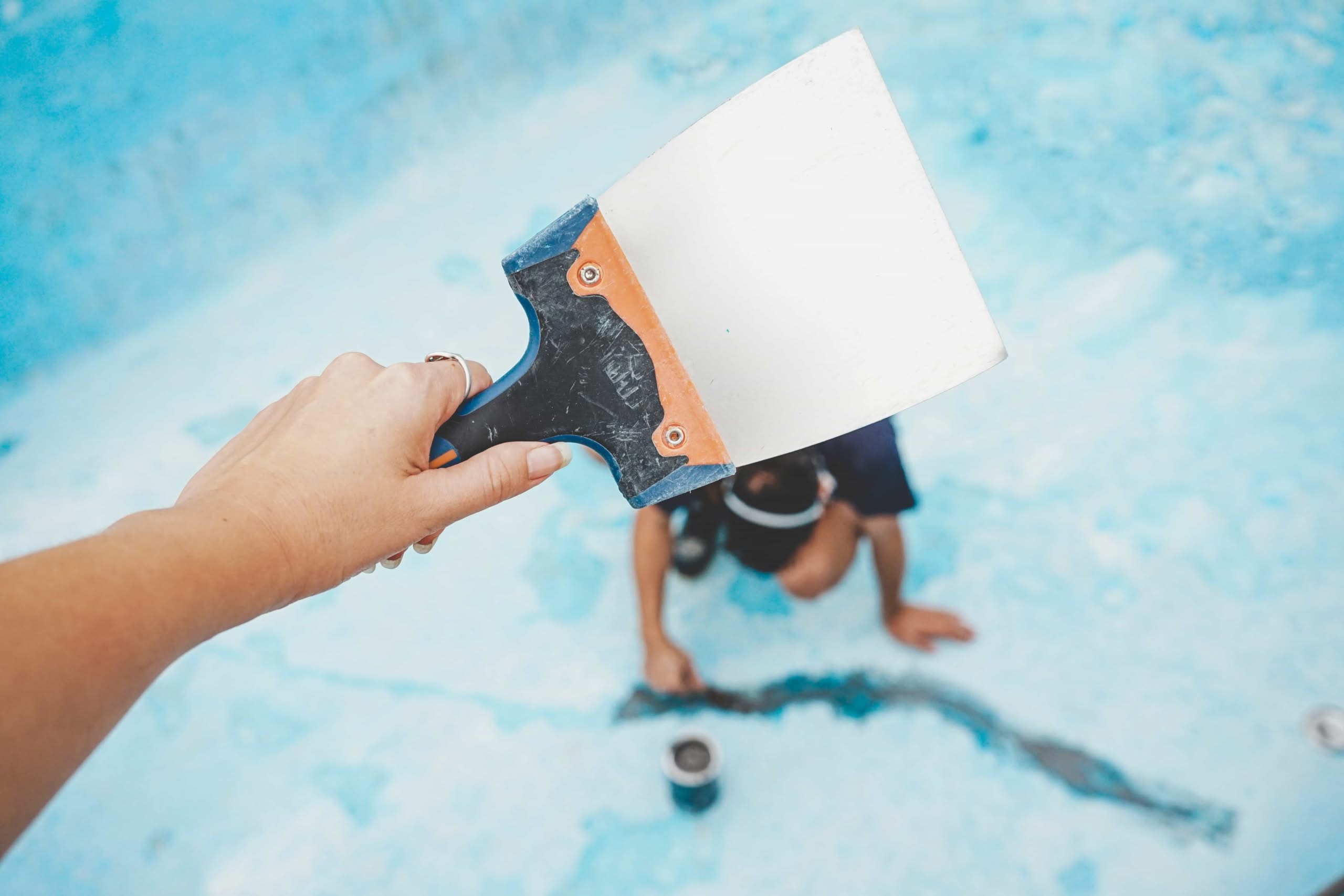
Ready to choose a finish? See our pool resurfacing service in The Villages and Marion County.
PebbleTec vs. Quartz: The Best Pool Resurfacing Options in Central Florida
Key Takeaways: Pebble vs. Quartz Pool Resurfacing
Lifespan Superiority: PebbleTec finishes deliver a functional lifespan of 15 to 25+ years, whereas modified quartz aggregates generally last between 10 and 15 years.
Texture Variations: Quartz provides a smooth, tightly packed profile underfoot, while pebble aggregates yield a textured, slip-resistant surface.
Chemical Defenses: Larger pebble aggregates minimize exposed cement surface area, offering superior protection against high LSI acid etching and scale buildup.
Warranty Constraints: Both materials require application by authorized, licensed technicians to preserve multi-year manufacturer product warranties.
When you compare PebbleTec vs. Quartz, you are looking at the two most popular premium aggregate finishes on the market today. If you live in the Sunshine State, discovering the best pool resurfacing options Central Florida has to offer isn’t just about custom backyard aesthetics—it is a mandatory asset-protection strategy to get through the blazing summer months. The intense humidity, direct UV radiation, and soaring water temperatures put immense physical stress on every square inch of your pool’s interior surface.
If you are looking at options to resurface an aging pool or planning a brand-new custom build, choosing the right material is a massive financial decision. A standard white plaster pool finish breaks down far too quickly under the punishing regional sun. Choosing between a PebbleTec vs. Quartz pool finish means balancing longevity, foot comfort, stunning aesthetics, and upfront budget against the brutal climate conditions unique to Central Florida.
In this comprehensive expert guide, we break down exactly how these materials perform, the hidden costs of each, and why a professional installation from Trident Pool Solutions is your only guarantee for a pool finish that lasts.
Table of Contents
The Battle Against Heat, UV Exposure, and Chemical Stress
What is a PebbleTec Pool Finish?
What is a Quartz Pool Finish?
PebbleTec vs. Quartz: Head-to-Head Comparison
Cost Analysis: Is the PebbleTec Upgrade Worth It?
The Danger of DIY Pool Resurfacing in Florida
Why a Professional Installation is Mandatory
Frequently Asked Questions
The Florida sun is unforgiving, especially from May through September. Extreme ambient heat accelerated by high humidity can wreak havoc on standard plaster finishes. High water temperatures cause pool chemicals, specifically free chlorine reserves, to deplete rapidly, forcing pool owners to use more aggressive chemical additions to maintain sanitization safety and stave off algae blooms.
This constant chemical flux, paired with direct ultraviolet rays, degrades inferior plaster over time. Pool water that falls out of the ideal Langelier Saturation Index (LSI) balance can become highly corrosive, literally eating away the structural calcium hydroxide in your pool’s cement matrix. This leads to premature etching, fading, rough calcium scaling, organic staining, and structural chipping.
When assessing the top pool resurfacing options Central Florida pool builders recommend, you are looking at two “aggregate” finishes specifically engineered to outlast traditional marcite plaster. However, they go about achieving this durability in completely different ways, yielding contrasting textures, price tags, and total lifespans.
PebbleTec® is a premium, globally recognized brand name that pioneered the aggregate pool finish industry. A PebbleTec surface is composed of naturally tumbled, smooth river pebbles sourced from around the world. These stones are mixed with a specialized, highly fortified polymer cement matrix and applied to the pool shell.
Because the finish utilizes naturally rounded stones, it provides an organic, three-dimensional texture that mimics a natural lake bed, tropical lagoon, or luxury resort stream. It is famously durable because the natural stone itself is virtually impervious to chemical damage and UV degradation. The larger pebbles significantly reduce the amount of exposed cement (the weakest link in any pool finish), which stops pool chemicals from eating away at the surface structure.
A quartz pool finish blends finely crushed quartz crystals with a polymer-modified white cement. Quartz is one of the hardest natural minerals found on Earth, ranking high on the Mohs hardness scale.
During the manufacturing process, these crushed quartz crystals are often ceramic-coated with brilliant pigments to create vibrant, shimmer-heavy colors that catch the sunlight beneath the water. Because the quartz aggregate is crushed much smaller than river stones, it offers a much smoother, tighter surface texture compared to stone pebbles while maintaining excellent stain resistance over standard plaster.
To determine the ideal surface for your backyard, let’s break down how PebbleTec vs. Quartz perform across the most critical metrics for Florida homeowners.
Durability, Lifespan, and Warranty
PebbleTec: This material is widely regarded by industry experts as the undisputed gold standard for longevity. A professionally applied PebbleTec finish can easily last 15 to 25+ years with proper water chemistry. The natural river stones do not break down, fade, or react aggressively to pool chemicals. Furthermore, authentic PebbleTec comes with a robust manufacturer warranty, provided it is installed by certified applicators.
Quartz: While vastly superior to classic plaster (which only lasts 7 to 10 years in Florida), quartz finishes typically have a lifespan of 10 to 15 years. Over a decade of exposure to intense heat, the exposed cement matrix surrounding the small quartz crystals can begin to show signs of micro-etching or staining if water chemistry is neglected.
Texture, Feel, and Foot Comfort
PebbleTec: The organic texture is distinct. Many swimmers enjoy the slip-resistant texture and the slight “foot massage” feel it provides on pool steps, Baja shelves, and wading areas. However, some individuals with highly sensitive feet or young children playing water volleyball for hours may find the original PebbleTec slightly too textured. (Note: PebbleTec offers specialized lines like PebbleSheen and PebbleFina that use much smaller stones for a smoother feel).
Quartz: If you prioritize a smooth finish that won’t scratch sensitive skin or snag delicate swimwear, quartz is a highly compelling choice. It offers a sleek, polished surface that balances slip-resistance with comfort, making it excellent for families who host frequent, active pool parties.
Aesthetics, Water Color, and Shimmer
PebbleTec: It yields a rich, natural look with deep tones. The pebbles cast subtle shadows under the water, creating deep dramatic blues, vibrant teals, or warm earthy greens depending on the color choice. It looks like a high-end natural oasis.
Quartz: Quartz crystals reflect sunlight beautifully, creating a brilliant, uniform sparkle. If you want a modern, crisp look with bright, glowing blues and a perfectly uniform color gradient across the entire basin, quartz delivers exceptional visual impact.
Heat and Chemical Resilience
Both finishes perform remarkably well against the high ambient heat of a Florida August. However, PebbleTec holds a definitive edge in chemical resilience. Because Pebble finishes use larger aggregates, there is significantly less exposed cement. Plaster and cement are the exact elements vulnerable to acid etching, calcium scaling, and chemical erosion. The more stone you have, the more bulletproof your pool is.
| Performance Metric | PebbleTec Aggregate | Modified Quartz Aggregate |
| Average Lifespan | 15 – 25+ Years | 10 – 15 Years |
| Surface Texture | Distinctly Textured / Slip-Resistant | Smooth / Gentle on Sensitive Feet |
| Chemical Resilience | High (Minimal Exposed Cement) | Moderate (Higher Cement Exposure) |
| Stain Resistance | Excellent | Very Good |
| Initial Investment | Premium / High-Tier Capital Expense | Moderate / Budget-Friendly Upgrade |
When comparing PebbleTec vs. Quartz pricing, you have to look past the initial installation estimate and consider the lifetime cost of the pool.
Quartz is generally the more budget-friendly upgrade. It costs more than basic white plaster but significantly less than premium pebble finishes. For homeowners looking to manage their initial capital expenses, or those who want a beautiful, smooth finish without maxing out their budget, quartz is a fantastic middle-ground.
PebbleTec requires a higher initial investment. The materials are premium, imported, and the application process requires intense, highly specialized labor. However, when you factor in that a PebbleTec pool will likely last twice as long as a quartz pool (20+ years vs. 10 to 12 years), the long-term ROI makes PebbleTec the more cost-effective choice over the life of your home. You will save thousands by avoiding a second, premature pool resurfacing project.
To dive deeper into standard industry guidelines on pool surface longevity and structural certifications, explore the technical resources provided by the Pool & Hot Tub Alliance (PHTA) or review water balancing science via the Orenda Technologies Langelier Saturation Index Guide.
With the rise of home improvement tutorials online, some homeowners consider tackling pool resurfacing as a Do-It-Yourself (DIY) project to save money on labor costs. This approach can be incredibly costly. Pool resurfacing is a highly specialized, time-sensitive trade that requires heavy industrial equipment, precise timing, chemical expertise, and seasoned physical craftsmanship. Attempting a DIY installation on advanced pool resurfacing options Central Florida homeowners invest in can result in catastrophic damage to your pool shell and thousands of dollars in emergency repair bills.
The Risk of Bond Failure and Delamination
Applying an aggregate finish requires an intimate understanding of how new materials bond to old concrete shells. If the existing plaster is not chipped out, pressure blasted, or acid-washed properly, the new finish will fail to adhere. This causes delamination, where large, heavy sheets of your brand-new finish crack, bubble, and peel completely away from the pool walls. Fixing a delaminated pool requires a full pool drain, an expensive abrasive blowout of the ruined material, and starting the entire application process completely from scratch.
Irreversible Aesthetic Shading and Trowel Marks
Aggregate finishes are not applied like simple house paint. They must be sprayed on evenly and aggressively hand-troweled at a very specific thickness. For quartz and pebble finishes, the surface must be washed or water-exposed at the exact right moment during the curing process to reveal the hidden crystals or stones.
If you miss this tight window in the 95-degree Florida heat by even 30 minutes, the finish will “flash cure” with permanent streaks, ugly trowel marks, or uneven blotches of color that cannot be fixed without grinding down the material. Furthermore, if the 28-day chemical start-up process is handled incorrectly, your new finish can be ruined before you ever swim in it.
To maximize the lifespan of your pool surface and protect your investment, you must rely on licensed swimming pool contractors who possess specialized equipment and manufacturer certifications. At Trident Pool Solutions, we have the niche expertise required to handle complex aggregate finishes in Florida’s challenging climate.
Advanced Surface Preparation and Bond Troweling
A professional team uses industrial-grade equipment to strip your old, failing plaster down to its sound structural gunite shell. We apply specialized multi-layered bond coats to guarantee the aggregate finish permanently adheres to the substrate. Professional troweling ensures a perfectly uniform thickness across complex radiuses, deep-end slopes, and custom step details.
Strict Warranty Protection and E-E-A-T Standards
Major aggregate manufacturers will only honor product warranties if the material is mixed and applied by an authorized, certified applicator. For example, official PebbleTec materials are exclusively available to licensed professionals who have gone through extensive factory training. If you attempt a DIY application or hire an uncertified, uninsured handyman, you immediately forfeit all product warranties. This leaves you fully liable for any defects, structural wear, or water loss issues down the road. Trust the authority, expertise, and real-world experience of dedicated pool professionals.
If you are evaluating complete backyard transformations alongside a surface upgrade, discover our specialized structural services on our comprehensive Trident Pool Solutions services hub to maximize your long-term efficiency.
What is the main physical difference between PebbleTec and Quartz pool finishes?
The main physical difference is the size and shape of the aggregate. PebbleTec uses larger, naturally rounded river pebbles that create a distinct, slip-resistant, textured surface mimicking a natural lagoon. Quartz finishes utilize smaller, finely crushed quartz crystals blended with fortified cement, resulting in a much smoother, tightly packed surface underfoot.
How long does it take to complete a professional pool resurfacing project?
A professional pool resurfacing project typically takes 5 to 7 days of active structural work on-site, depending on the weather conditions and the size of the pool. However, after the finish is applied and the pool is filled with water, a strict 28-day chemical start-up and brushing routine must be followed to allow the material to cure perfectly.
Can a rough pool finish be smoothed out after installation?
While specialized sanding pads and diamond grinding equipment can reduce minor rough spots on aggregate finishes, major texture adjustments are difficult to perform after the material has cured. It is vital to select the proper aggregate size (such as choosing PebbleSheen over original PebbleTec) prior to the mixing and troweling process.
Does a quartz pool finish fade or stain easily under the sun?
Quartz crystals themselves are highly stain-resistant and colorfast because they are ceramic-coated with durable pigments. However, because quartz finishes contain a higher percentage of exposed white cement plaster surrounding the crystals, they are slightly more vulnerable to chemical staining or acid etching over time compared to large-pebble surfaces if water chemistry is neglected.
Ready to explore specific aggregate colors and quotes for your pool?