
Fidelity bonds for pool installation companies are a form of financial protection that reimburses homeowners if a contractor’s employee steals money, materials, or deposits during a project. Most families never think to ask about this until a deposit disappears or a project stalls halfway through. That misconception — assuming "licensed and insured" automatically covers theft — costs Florida homeowners real money every year.
At Trident Pool Solutions, we get asked about bonding more than you’d think, especially from retirees in The Villages who are writing a five-figure check for a custom inground pool. This guide breaks down what fidelity bonds actually cover, how they differ from insurance, and the exact questions to ask before you hire anyone to touch your backyard.
📌 Key Takeaways
- A fidelity bond covers theft or dishonest acts by a contractor’s employees — it is NOT the same as general liability insurance.
- Florida does not universally mandate fidelity bonds for pool builders, so you must ask directly and request proof.
- Combine bond verification with a license check through the state licensing board before signing any contract.
- Financing a pool does not eliminate the need for bonding checks — protect your deposit either way.
- Ocala and The Villages homeowners should request bonding, licensing, and insurance documents in writing, not verbally.
Jump to a section:
- What a Fidelity Bond Actually Covers
- What These Bonds Cover on a Real Pool Project
- How to Vet a Pool Contractor Locally
- Fiberglass Pool Installation in Fruitland Park, FL
- Can You Finance a Pool Installation?
- Trident’s Approach to Trust and Transparency
- FAQ
What Is a Fidelity Bond, and Why Should Pool Buyers Care?
Quick Answer: A fidelity bond reimburses you if a contractor’s employee commits theft or fraud on your job site — it protects against dishonesty, not accidents. It’s a narrower, more specific protection than general liability coverage.
Think of it this way: general liability insurance covers a cracked window or a dropped pump. A fidelity bond covers something uglier — an employee pocketing your deposit or swapping out premium tile for cheaper material and billing you full price. According to the U.S. Small Business Administration, bonding exists specifically to protect consumers from financial loss caused by the bonded party’s own misconduct, not from normal job-site accidents.
Fidelity Bond vs. Surety Bond vs. Liability Insurance
These three terms get mixed up constantly, even among contractors. A surety bond guarantees a contractor will finish the job as promised; a fidelity bond guarantees honesty among staff; liability insurance covers accidental property damage or injury. All three matter, but they solve different problems.
⚠️ Common Mistake: Homeowners often assume "insured" means "bonded." It doesn’t. Always ask for both documents by name, not just a general assurance of coverage.
| Protection Type | What It Covers | Who It Protects |
|---|---|---|
| Fidelity Bond | Theft or dishonest acts by employees | Homeowner’s money/property |
| Surety Bond | Job completion per contract terms | Homeowner + state licensing board |
| General Liability Insurance | Accidental damage or injury | Homeowner and third parties |

Fidelity Bonds for Pool Installation Companies: What They Actually Cover
Quick Answer: In practice, these bonds cover deposit theft, material substitution fraud, and payroll-related dishonesty tied to a crew working on your property. Coverage limits and terms vary by bonding company and state.
Pool construction involves large upfront deposits, subcontracted crews, and multiple site visits over several weeks. That combination creates opportunity for the rare bad actor. A fidelity bond gives you a financial backstop if that happens, separate from whatever the contractor’s own reputation promises.
Real Scenarios Where a Bond Protects Homeowners
We’ve heard secondhand stories from Ocala clients who switched contractors mid-project after a deposit dispute with a previous company. In cases like that, a valid fidelity bond is often the only practical way to recover funds quickly, rather than pursuing a lawsuit that can take years.
💡 Expert Insight: As a veteran-owned company, we’ve seen firsthand how paperwork gaps — not bad intentions — cause most homeowner headaches. Ask early, ask in writing, and keep copies.
As of 2026, Florida requires pool contractors to hold a state certification, but bonding requirements can vary by county and by the specific type of work performed. That’s why verifying documentation directly with each company remains the homeowner’s responsibility, not an assumption to make.
How to Vet a Pool Contractor in Ocala or The Villages
Quick Answer: Verify the contractor’s state license, request bonding and insurance certificates, check references, and confirm everything in writing before any deposit changes hands. This applies whether you’re building new or remodeling.
Ocala and The Villages have no shortage of pool companies competing for your business, which is good for pricing but means due diligence matters more, not less. A five-minute license lookup can save you thousands.
Questions to Ask Before You Sign a Contract
- Are you licensed with the state, and can I see the certificate?
- Do you carry fidelity bonds for pool installation companies, or just general liability?
- Who handles my deposit, and is it held in an escrow-style account?
- Can I see three recent references from Marion or Sumter County jobs?
- What happens if a crew member is dismissed mid-project?
You can confirm license status directly through the Florida Department of Business and Professional Regulation, which maintains a public lookup tool. Cross-check that against whatever paperwork the contractor hands you.
✅ Quick Tip: Snap a photo of every license and bond certificate with your phone the day it’s shown to you, timestamped, in case anything needs to be referenced later.
A pre-purchase pool inspection from an independent third party is another smart layer of protection, especially for remodel or resale situations where a previous contractor’s work is already in the ground.
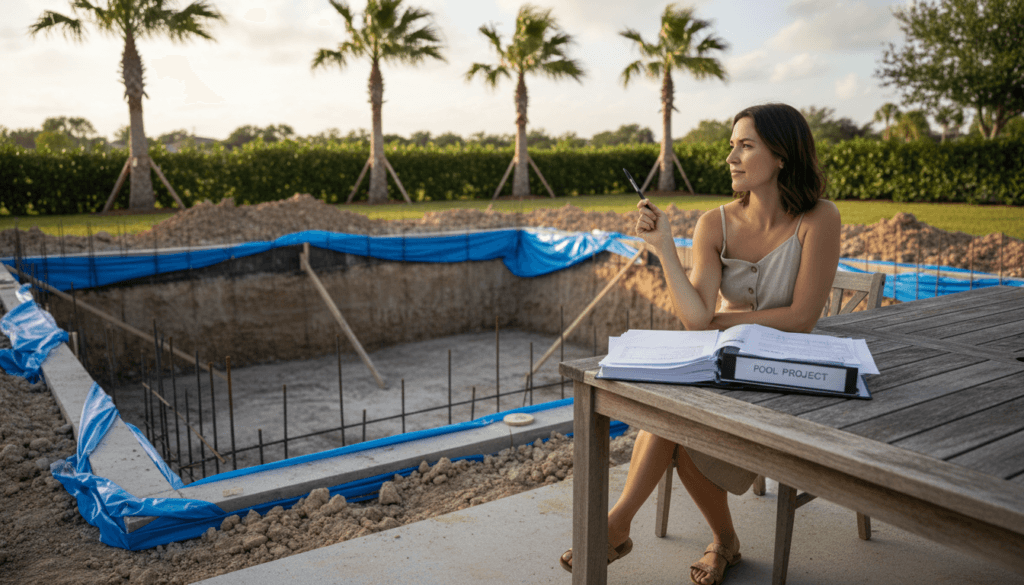
Fiberglass Pool Installation in Fruitland Park, FL: A Local Case Study
Quick Answer: Fiberglass pool installation in Fruitland Park typically moves faster than gunite construction, often 3-6 weeks from excavation to water, but the same bonding and licensing checks still apply. Speed doesn’t reduce the need for vetting.
Fruitland Park sits inside our regular Lake County service territory, and fiberglass shells have become popular there among retirees who want a shorter construction timeline than poured concrete. The shell arrives pre-formed, gets set into an excavated hole, and is backfilled and plumbed on site.
📊 Data Point: According to industry reporting cited by state consumer protection offices, home improvement fraud complaints rise during peak building seasons — a reminder that verification steps matter most when contractors are busiest.
Even with a faster fiberglass timeline, the deposit, subcontracted labor, and equipment delivery all still create the same theft-risk window a fidelity bond is designed to address. Don’t skip the paperwork just because the build is quick.
Can You Finance a Pool Installation?
Quick Answer: Yes, most homeowners in Ocala and The Villages finance part or all of their pool through a contractor financing partner, a home equity line, or a personal loan. Financing does not replace the need to verify bonding and licensing.
A custom inground pool is a major purchase, often rivaling a kitchen remodel or a used car in cost. Financing spreads that cost over months or years instead of draining savings in one lump sum.
Comparing Common Pool Financing Paths
| Option | Typical Term | Best For |
|---|---|---|
| Contractor financing plan | 5-15 years | Buyers wanting one point of contact |
| Home equity line (HELOC) | Variable, revolving | Homeowners with strong equity |
| Personal/unsecured loan | 2-7 years | Smaller equipment or remodel projects |
The Consumer Financial Protection Bureau offers plain-language guidance on comparing loan terms and avoiding predatory lending, which is worth a read before signing anything. We also break down our own pool financing options for buyers comparing new construction against a remodel budget.
⚠️ Common Mistake: Signing a financing agreement before confirming the contractor’s bonding status. Loan approval has nothing to do with contractor trustworthiness — they’re separate checks.
Trident’s Approach: Insurance, Bonding, and Transparency
Quick Answer: We’re a veteran-owned company that believes documentation should be handed over without a homeowner having to ask twice. Transparency builds the kind of trust a bond alone can’t replace.
We’d rather over-explain our paperwork than leave a family guessing, especially retirees managing a fixed budget for a project like new pool construction in Ocala or pool construction in The Villages. If you ever want a plain-English walkthrough of your contract, ask — that’s what the neighborly-expert approach looks like in practice.
💡 Expert Insight: We tell every client the same thing: a good contractor should never make you feel awkward for asking about bonding. If they hesitate, that’s your answer.
For homeowners doing broader research, our Pool School resource library covers additional contractor-vetting and maintenance topics worth bookmarking.
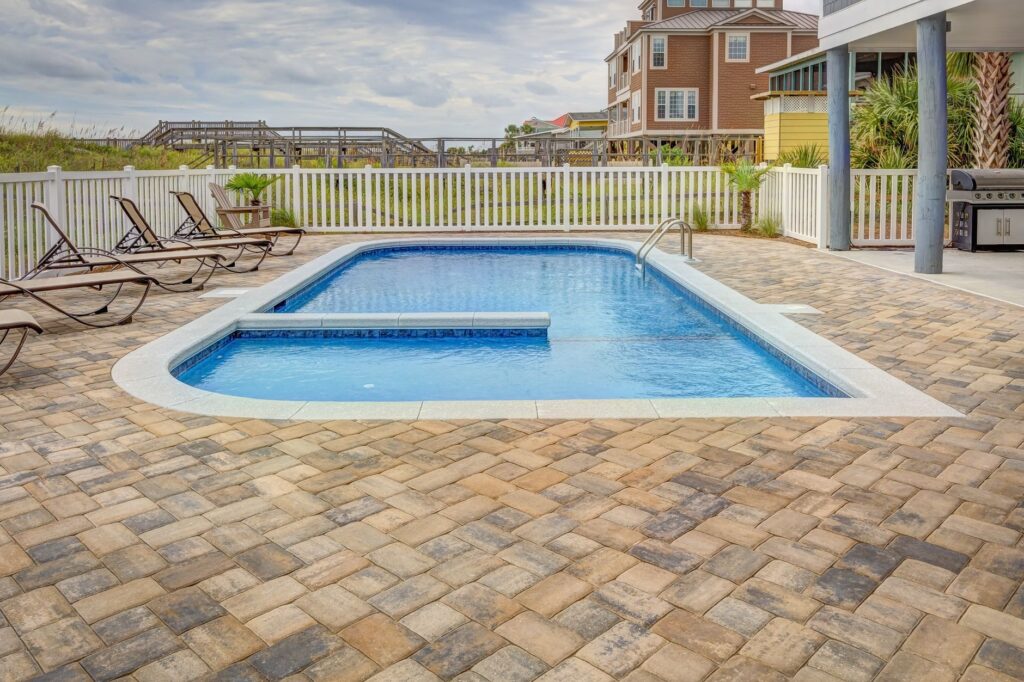
FAQ: Fidelity Bonds and Pool Contractor Vetting
What is a fidelity bond for pool installation companies?
A fidelity bond for pool installation companies reimburses a homeowner if an employee of the contractor steals money, materials, or misuses a deposit during the project. It’s separate from general liability insurance and specifically addresses dishonesty rather than accidents.
Do Florida pool contractors need fidelity bonds or just insurance?
Florida requires state licensing and typically general liability insurance for pool contractors, but fidelity bonding isn’t universally mandated statewide. That means homeowners should ask directly and request documentation rather than assuming it’s automatically included.
How much does a fidelity bond cost for a pool company?
Costs vary by bonding company, coverage limit, and the contractor’s claims history, so there’s no single flat rate to quote. Homeowners typically don’t pay for this directly — it’s a cost the contractor absorbs as a business expense.
Can you finance a pool installation in Ocala or The Villages?
Yes, financing is common through contractor payment plans, home equity lines, or personal loans, and most local pool companies offer at least one option. Comparing terms across two or three lenders before committing is a smart step for any size project.
Is fiberglass pool installation available in Fruitland Park, FL?
Yes, fiberglass pool installation is available in Fruitland Park and typically completes faster than gunite construction. Homeowners should still confirm licensing and bonding regardless of which pool type they choose.
What’s the difference between a licensed and bonded pool contractor?
A licensed contractor has passed state certification requirements to legally perform pool work, while a bonded contractor carries a financial guarantee against theft or incomplete work. The two credentials address different risks and both matter for a large project.
How do I verify a pool contractor’s license in Florida?
You can search a contractor’s license status directly through the Florida Department of Business and Professional Regulation’s public lookup tool. Always cross-reference the license number against the paperwork the contractor provides before signing a contract.
Final Thoughts
Fidelity bonds for pool installation companies aren’t the flashiest part of building a pool, but they’re one of the cheapest forms of peace of mind available to you as a buyer. Combined with a verified license, proof of insurance, and honest references, bonding rounds out a complete picture of who you’re trusting with your backyard and your deposit. Ocala and The Villages families deserve that clarity before a single shovel hits the ground. As always, a reputable contractor should welcome these questions, not dodge them.
- Request bonding, insurance, and license documents from any contractor you’re considering.
- Verify the license number through the state licensing board’s public database.
- Compare financing terms before signing, using resources like the CFPB’s guidance.
- Ask for three recent local references from Marion, Lake, or Sumter County projects.
- Schedule a walkthrough with a transparent, veteran-owned team before you commit.
Trident Pool Solutions is a Florida-licensed pool contractor serving Ocala, The Villages, Belleview, Leesburg, Lady Lake, and Fruitland Park. Ready to talk through bonding, licensing, or financing for your project? Schedule a consultation with our team today.