
An Ocala public pool is a budget-friendly way to cool off, but it usually means shared lanes, posted hours, and a drive across town. Between community pools, splash pads, and aquatic centers, Marion, Lake, and Sumter County families have real choices — each with its own fees, crowd levels, and amenities. This guide breaks down where to swim publicly, then explains when it finally makes more sense to build your own backyard oasis instead of circling a packed parking lot on a Saturday.
We’ve toured most of these facilities ourselves while servicing pools across the region, and we hear the same question constantly: "Is it cheaper to just get my own pool?" The honest answer depends on your family size, how often you swim, and what you value — privacy, convenience, or a low upfront cost. Let’s walk through both sides so you can decide with real numbers, not guesswork.
📌 Key Takeaways
- Ocala public pool facilities typically charge $3-$8 per visit, with seasonal passes available at most city and county locations.
- Community aquatic centers offer swim lessons, lap lanes, and splash pads, but hours are limited and vary by season.
- Families who swim more than twice weekly often break even on a backyard pool within 2-4 years compared to public admission fees.
- Private pool ownership adds year-round access, no crowds, and higher resale appeal for Marion, Lake, and Sumter County homes.
- Routine maintenance and safety inspections matter whether you swim public or private — chemical balance issues cause most closures.
Jump to a Section
- What Ocala Public Pools Offer Families
- Top Ocala Public Pool Options to Explore
- Public Pool vs. Private Pool: Which Fits Your Family?
- When a Backyard Pool Beats the Public Pool Line
- Keeping Your Private Pool Safe and Swim-Ready
- FAQ
What Ocala Public Pools Offer Families
Quick Answer: Ocala public pools give residents an affordable, no-commitment place to swim, with facilities ranging from neighborhood splash pads to full aquatic centers featuring lap lanes and diving areas. Expect modest admission fees, seasonal schedules, and shared space during peak hours.
Most public pool facilities in Marion County are run by the city or county parks and recreation department, and they open seasonally around spring break through early fall. Some indoor aquatic centers stay open year-round for lap swimming and lessons. Pricing is usually per-visit or via a discounted household pass.
Hours, Fees, and Amenities at a Glance
Hours shift by season, and many locations close for staff shortages or maintenance without much notice. According to the Florida Department of Health, public pool operators must meet state sanitation and water-quality codes, which occasionally forces short-term closures for testing. That’s normal — it’s a sign the facility is following the rules, not cause for alarm.
✅ Quick Tip: Call ahead or check the parks department’s social media before driving out — Florida’s public pools close for weather and chemical readings more often than people expect.
Amenities vary widely. Some locations offer swim lessons and lifeguard-supervised open swim; others are basic splash pads with no deep water at all. Families in Belleview, Leesburg, and Wildwood often drive into Ocala proper for the larger aquatic centers since smaller towns have fewer full-size facilities.
Top Ocala Public Pool Options to Explore
Quick Answer: Ocala’s strongest public swimming options include city-run recreation pools, a few larger aquatic centers with lap lanes, and seasonal splash pads scattered through Marion County parks. We’ve ranked the standouts in detail on our best public swimming pools in Ocala guide.
If you’re weighing a first visit, start with a facility that offers both a shallow area for young kids and a lap lane for adults. Splash pads are great for toddlers but offer nothing for teens or serious swimmers, so match the venue to your family’s actual needs.
Community Pools vs. Aquatic Centers
Community pools tend to be smaller, cheaper, and closer to residential neighborhoods — think of them as the corner store of public swimming. Aquatic centers are the supermarket version: bigger, pricier, with more programming like lessons and competitive swim teams.
| Feature | Community Pool | Aquatic Center |
|---|---|---|
| Typical Admission | $2-$5 | $5-$8 |
| Lap Lanes | Rarely | Usually |
| Swim Lessons | Limited | Regular schedule |
| Crowd Level | Moderate | High on weekends |
| Season | Spring-Fall | Often year-round (indoor) |
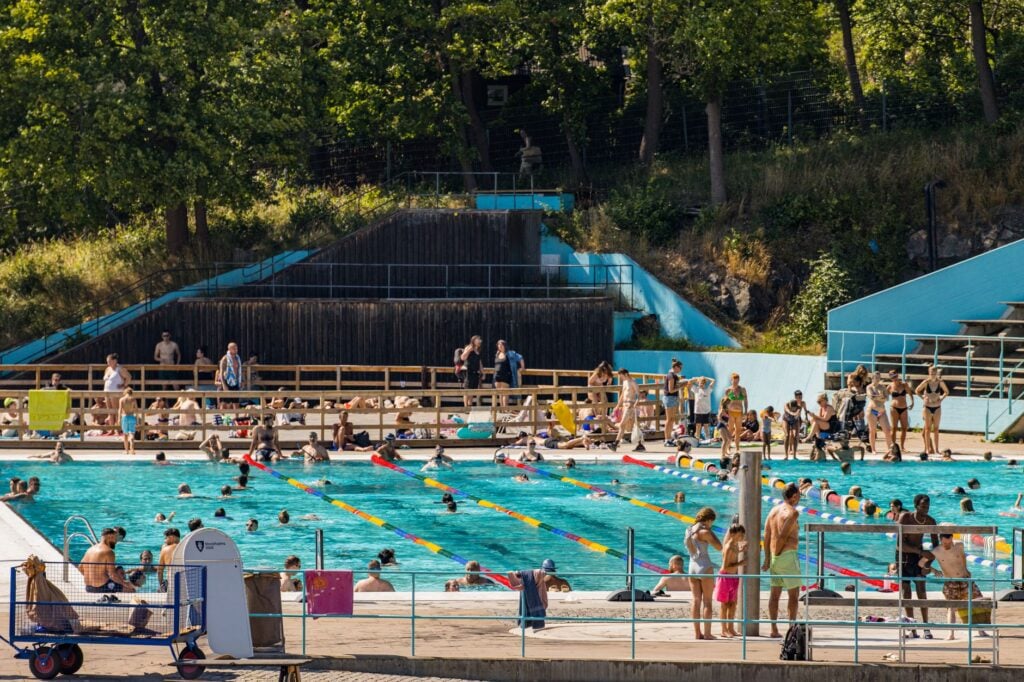
💡 Expert Insight: We often meet homeowners who tried the public pool route for years before deciding the drive time and crowds weren’t worth it anymore — that’s usually when the backyard pool conversation starts.
Public Pool vs. Private Pool: Which Fits Your Family?
Quick Answer: Public pools win on upfront cost and zero maintenance; private pools win on convenience, privacy, and long-term value if you swim often. The right choice comes down to frequency of use and how much you value your own schedule.
A single family visit to an Ocala public pool might cost $20-$30 for a household of four. That adds up fast if you’re swimming weekly through a Florida summer that often stretches from March into October.
Doing the Math on Frequency
Here’s a simple way to think about it: multiply your typical visits per month by the admission cost, then compare that to financing a modest inground pool over several years. Many families discover the break-even point arrives faster than they assumed.
📊 Data Point: The CDC’s Healthy Swimming program notes that recreational water illness outbreaks are most common at public, shared-water venues — a factor some families weigh heavily when comparing options.
| Factor | Public Pool | Backyard Pool |
|---|---|---|
| Upfront Cost | None | $35,000-$90,000+ |
| Ongoing Cost | Per-visit fees | Maintenance & utilities |
| Access | Limited hours | 24/7 |
| Privacy | Shared space | Fully private |
| Resale Value Impact | None | Often positive in FL |
⚠️ Common Mistake: Assuming a backyard pool is "too expensive" without comparing financing options — many Marion, Lake, and Sumter County homeowners spread the cost with a pool financing plan that lands close to a gym membership per month.
When a Backyard Pool Beats the Public Pool Line
Quick Answer: A backyard pool makes the most sense once you’re swimming more than twice a week, hosting guests regularly, or simply tired of towel-drying kids in a car after every public pool trip. It also adds outdoor living value that a public facility never can.
For retirees in The Villages or Lady Lake, a private pool means low-impact exercise on your own schedule — no lane-sharing, no posted hours. For families in Ocala or Silver Springs, it’s about weekend gatherings without the drive.
Upgrades That Make Ownership Worth It
A new pool doesn’t have to mean a bare concrete box. Today’s builds lean toward freeform and modern designs, energy-efficient variable-speed pumps, and smart automation that lets you heat, light, and clean the pool from your phone.
✅ Quick Tip: Ask your builder about LED lighting upgrades up front — retrofitting later costs more than including it during construction.
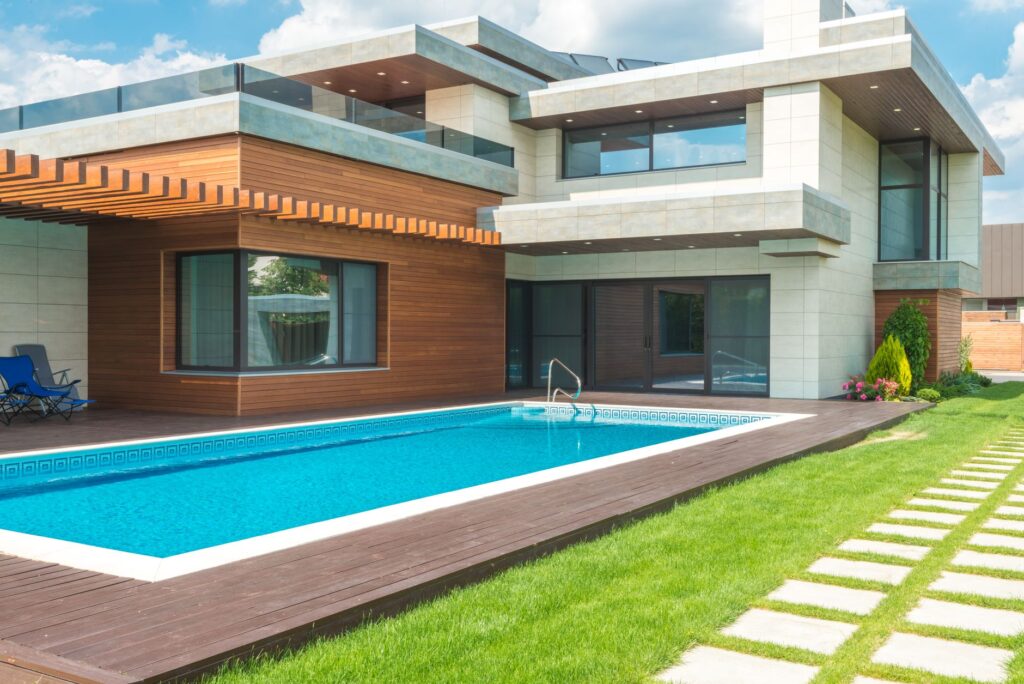
We’re a veteran-owned crew, and we build the way we’d want built for our own families — solid equipment, honest timelines, and no upsell games. It’s a straightforward trade: public convenience now, or private freedom for decades.
Keeping Your Private Pool Safe and Swim-Ready
Quick Answer: Whether public or private, pool safety comes down to water chemistry, filtration, and routine inspection. Skipping any of the three is how green water, algae, and closures happen.
Public facilities follow state-mandated testing schedules, but backyard pools rely on the owner. That’s where a lot of new pool owners get caught off guard during their first Florida summer.
Seasonal Prep for Marion, Lake & Sumter County Pools
Heat, heavy rain, and hurricane season all stress a pool’s system differently. According to EPA guidance on pool chemical safety, improper chemical storage and dosing are among the top causes of pool-related injuries nationwide — a good reminder that DIY treatment isn’t always the safer route.
| Season | Priority Task | Risk If Skipped |
|---|---|---|
| Spring | Filter check, chemical rebalance | Algae bloom |
| Summer | Water loss monitoring | Equipment strain |
| Hurricane Season | Storm prep | Debris damage |
| Fall/Winter | Reduced pump run-time | Cloudy water |
💡 Expert Insight: Sudden water loss in July isn’t always a leak — evaporation rates spike in Florida heat. We cover the difference in our pool water loss guide.
The Pool & Hot Tub Alliance (PHTA) publishes the industry’s core standards for water treatment and equipment safety, and it’s worth a homeowner’s time to understand at least the basics. A yearly pool inspection catches small issues — a worn seal, a failing sensor — before they become expensive repairs.
⚠️ Common Mistake: Ignoring black or dark green spots on plaster, assuming they’ll scrub off. That’s often black algae taking root, and it needs a specific treatment, not just extra chlorine.
FAQ
Is there a free Ocala public pool option for families?
Some Marion County parks offer free splash pad access, though full pools with lap lanes typically charge a small admission fee. Check with the local parks and recreation department for current no-cost hours.
How much does it cost to visit an Ocala public pool?
Most Ocala public pools charge between $2 and $8 per person, with seasonal household passes often available at a discount. Prices vary by facility and whether it’s a community pool or a full aquatic center.
Are Ocala public pools open year-round?
Outdoor public pools generally operate seasonally from spring through early fall, while a handful of indoor aquatic centers stay open year-round for lessons and lap swimming. Always confirm current hours before visiting, since staffing and weather can affect the schedule.
Is it cheaper to build a private pool than pay for public pool visits?
For families swimming multiple times a week, a financed backyard pool often breaks even within a few years compared to ongoing admission fees. It depends on visit frequency, pool size, and financing terms.
What should I check before choosing a public swimming pool in Ocala?
Look at lifeguard coverage, posted water-quality testing, lane availability, and whether lessons are offered if you have young swimmers. Facilities that clearly post recent inspection results tend to be better maintained.
Do I need a permit to build a pool in Marion, Lake, or Sumter County?
Yes, residential pool construction requires local permitting, and a licensed contractor typically handles this as part of the build process. Our new pool construction team manages permitting for clients throughout the service area.
How do I keep my backyard pool as clean as a well-run public pool?
Consistent filtration run-time, weekly chemical testing, and an annual professional inspection replicate the standards public facilities follow. A saltwater system upgrade can also simplify chemical maintenance for busy households.
Final Thoughts
An Ocala public pool is a fine option for the occasional dip, especially for young families testing the water before a bigger investment. But for households swimming often, hosting gatherings, or simply craving convenience, a private backyard pool tends to win on lifestyle and long-term value. Weigh your frequency, budget, and patience for shared schedules before deciding which route fits your family this year.
- Visit one or two local public pools to gauge how often your family would realistically use one.
- Request a pool financing estimate to compare real monthly costs against admission fees.
- Book a consultation to discuss new pool construction options sized for your yard and budget.
- Schedule a pool inspection if you already own a pool and want a maintenance baseline.
Trident Pool Solutions is a veteran-owned team serving Ocala, The Villages, Belleview, Lady Lake, Leesburg, and Wildwood. Ready to trade the public pool line for your own backyard? Book your consultation now and let’s talk through what fits your family.