
Mission: Year-Round Swimming—Choosing Between Gas and Heat Pumps in The Villages
Best pool heater for The Villages Florida climate is the most debated topic among homeowners from Spanish Springs to Brownwood. Imagine it is a bright January morning. The air is a crisp 55°F, but the sun is shining, and you want to start your day with a few laps. You step toward the water, dip a toe in, and—ice. Without the right heating strategy, your beautiful investment sits dormant for four months of the year.
In North Central Florida, we don’t have the tropical winters of Miami, nor the deep freezes of the North. We live in a “swing climate.” This means your choice of a heater isn’t just about comfort; it is a strategic financial decision involving local utility rates, ambient air temperatures, and how you actually use your pool. At Trident Pool Solutions, we specialize in heater installations that turn “seasonal” pools into year-round retreats.
Table of Contents
The “Swing Climate” Challenge in The Villages
Electric Heat Pumps: The Efficiency King
Gas Heaters: The On-Demand Sprinter
ROI Comparison: Gas vs. Heat Pump
The Hybrid Solution: Why Many Villagers Choose Both
Frequently Asked Questions (FAQ)
Conclusion: Selecting Your Perfect System
The “Swing Climate” Challenge in The Villages
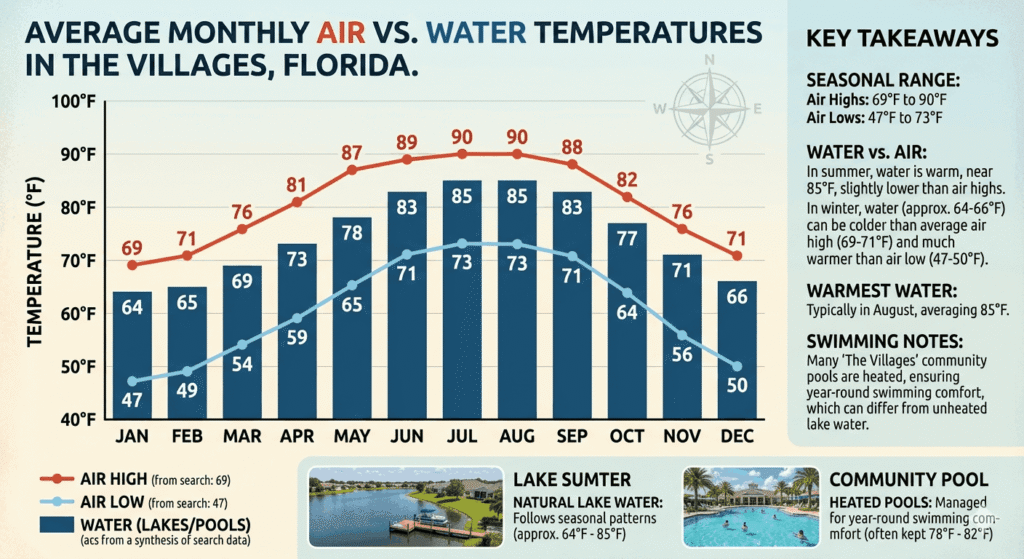
The Villages presents a unique challenge for pool temperature management. While South Florida stays warm, our winter nights often drop into the 40s or 50s. Standard unheated pools in our area can dip to 55°F in January.
To maintain the “Goldilocks Zone” of 78°F to 82°F, you need a system that can fight the overnight thermal loss. The best pool heater for The Villages Florida climate must be able to handle these fluctuations without sending your TECO or SECO bill into the stratosphere.
Electric Heat Pumps: The Efficiency King
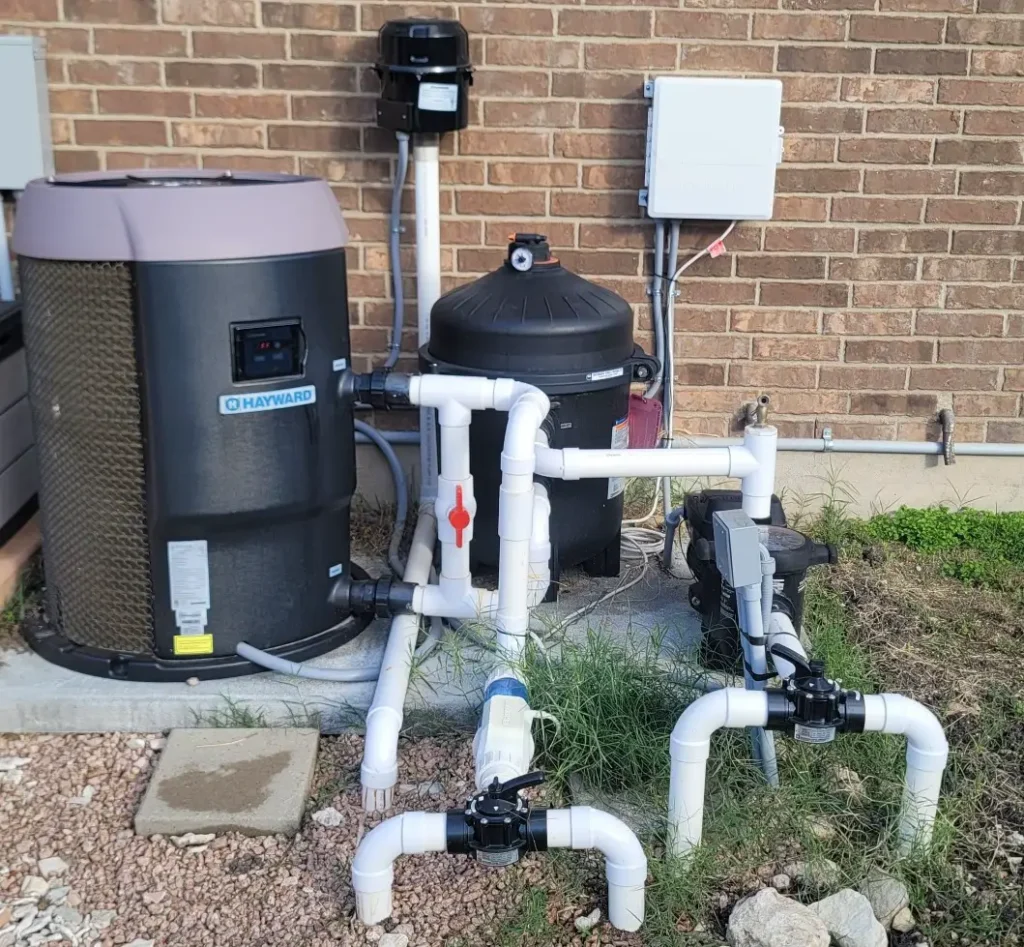
For the consistent, daily swimmer, a heat pump is often the best pool heater for The Villages Florida climate.
How They Work
Heat pumps don’t create heat; they transfer it. They pull warmth from the ambient air, compress it, and transfer it to your pool water. Because of this, they are incredibly efficient—often providing $5.00$ worth of heat for every $1.00$ of electricity spent.
The Limitations
Heat pumps rely on the air being at least 50°F. During those rare Ocala cold snaps where the temperature stays in the 40s, a heat pump will struggle to maintain high temperatures. However, for 90% of the Florida winter, they provide steady, low-cost warmth.
Gas Heaters: The On-Demand Sprinter
If you only use your pool when the grandkids visit, or if you have an attached spa that you want to heat to 102°F in twenty minutes, a gas heater is the undisputed champion.
Power and Speed
Gas heaters (Propane or Natural Gas) are “sprinters.” They can raise a pool’s temperature by 3°F to 5°F per hour, regardless of the outside air temperature. During heater installations, we often recommend gas for homeowners who prioritize “on-demand” luxury over daily maintenance.
The Trade-off
Gas is expensive to run. Heating a standard pool with gas can cost $300$ to $500$ per month if used daily, compared to roughly $100$ to $150$ for a heat pump.
ROI Comparison: Gas vs. Heat Pump
When determining the best pool heater for The Villages Florida climate, you must look at the total cost of ownership over 5 to 10 years.
| Feature | Electric Heat Pump | Gas (Natural/Propane) |
| Initial Cost | $3,500 – $6,000$ | $2,000 – $3,500$ |
| Monthly Operating Cost | $50 – $150$ | $200 – $500+$ |
| Heating Speed | Slow (24–48 hours) | Fast (1–4 hours) |
| Lifespan | 10–15 Years | 7–10 Years |
| Best For | Daily Swimmers | Occasional/Spa Users |
The “Payback” Period
While a heat pump costs more upfront, the average Villager recovers that extra investment in energy savings within 2 to 3 years. If you plan on staying in your home for the long term, the heat pump is the clear financial winner.
The Hybrid Solution: Why Many Villagers Choose Both
For the ultimate luxury experience, many high-end remodel projects in The Villages now include “Hybrid Heating.” This involves installing a high-efficiency heat pump for daily temperature maintenance and a small gas heater specifically for the spa.
By using automation and timers, you can program your heat pump to keep the pool at 80°F all week for pennies, then hit a button on your phone to engage the gas heater for a 100°F soak on Friday night. This setup provides the best ROI and the best user experience.
Frequently Asked Questions
What is the most energy-efficient pool heater?
A high-efficiency electric heat pump is the most energy-efficient choice. Look for units with titanium heat exchangers, which resist the “salty” air and chemicals common in Marion County.
Do I need a pool cover with my heater?
Yes! Using a solar blanket or liquid pool cover can reduce heat loss by up to 70%. Without a cover, you are essentially trying to heat the entire atmosphere of Florida.
Will a heat pump work when it’s freezing outside?
Most modern heat pumps have a “defrost cycle,” but their efficiency drops significantly below 50°F. If you want to swim during a frost warning, you need a gas backup.
Selecting Your Perfect System
There is no single “perfect” unit, but there is a best pool heater for The Villages Florida climate for your specific lifestyle. If you value low monthly bills and daily swimming, go with a heat pump. If you want a hot spa in minutes, go with gas.
At Trident Pool Solutions, we don’t just sell equipment; we design backyard experiences. Whether you are doing a full renovation with resurfacing or just need a simple filter maintenance check before heater season, our veteran-owned team is here to help.
Don’t let your pool go cold this winter. Contact Trident Pool Solutions for a Free Heater Consultation Today