
Good LED lighting installers do more than swap a bulb — they check your niche, wiring, and bonding grid before anything gets plugged in. If your pool light has gone dim, flickers, or still runs on an old incandescent bulb, you’re paying more for less glow and possibly risking a safety issue. This guide walks Ocala-area families and retirees through what a proper installation involves, what it costs, and how to pick a crew that actually knows Florida code.
We’ve swum in enough backyard pools around Marion, Lake, and Sumter counties to know that lighting is usually the last upgrade homeowners think about — and the first one they wish they’d done sooner. A fresh LED fixture transforms a plain evening swim into something worth showing off. It also uses a fraction of the electricity of the old halogen units builders installed a decade or two ago.
📌 Key Takeaways
- LED retrofits use up to 80% less energy than older incandescent or halogen pool lights, per Energy.gov.
- Florida requires licensed electrical or pool/spa contractors for in-water wiring work — always verify credentials.
- Average installation for an existing niche runs lower than a full new-niche install; get both quotes before deciding.
- Color-changing LEDs pair well with pool automation, letting you set moods from a phone app.
- A bonding and GFCI check should be part of every quote, not an upsell add-on.
Jump to a section:
- What LED Lighting Installers Actually Do
- Why Ocala Homeowners Are Upgrading
- Cost Factors and What to Expect
- DIY vs. Hiring a Licensed Pro
- How to Vet an Installer Near You
- Frequently Asked Questions
What LED Lighting Installers Actually Do
Quick Answer: A qualified pool lighting technician inspects the existing niche, tests wiring and bonding, then installs a sealed, code-compliant LED fixture rated for underwater use. It’s an electrical job first and a design upgrade second.
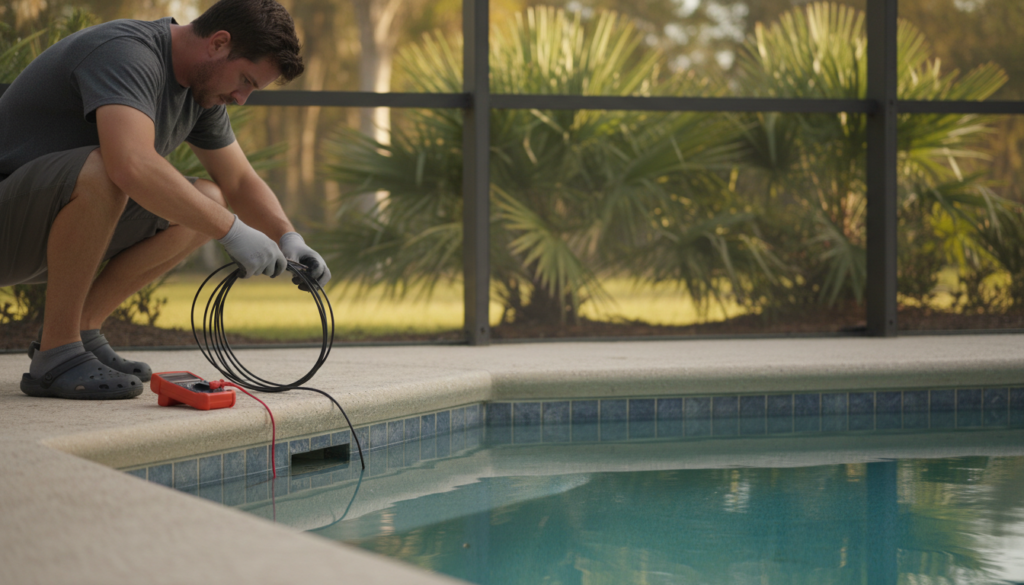
The process starts with shutting off power at the breaker, not just the switch. From there, the technician removes the old fixture, inspects the gasket and niche for corrosion, and tests the ground bonding wire that protects swimmers from stray voltage. Skipping this step is one of the most common shortcuts unlicensed handymen take.
Reading the Wiring Before the Light Goes In
Many Ocala-area pools built in the 1990s and early 2000s still run on older low-voltage transformers. A trained installer will confirm your transformer matches the new fixture’s voltage draw before wiring it in. Mismatched voltage is a leading cause of early LED failure.
⚠️ Common Mistake: Installing a 12-volt LED retrofit on a 120-volt system without a compatible transformer swap often burns out the bulb within weeks and can trip breakers repeatedly.
Why Ocala Homeowners Are Upgrading
Quick Answer: Families want brighter, safer evening swims, while retirees in communities like The Villages and On Top of the World like the low-maintenance, color-changing options that pair with existing pool automation.
We hear the same story across Belleview, Leesburg, and Wildwood: the original bulb finally died, and homeowners realize a full LED retrofit costs barely more than replacing a single incandescent bulb kit. Since LEDs last significantly longer — often rated for tens of thousands of hours — most customers treat this as a one-time upgrade rather than a recurring expense.
Energy Savings That Actually Add Up
According to the U.S. Department of Energy, LED fixtures use roughly 75-80% less electricity than older lighting technology while producing comparable or better output. For a pool light that runs several hours nightly, that difference shows up on the power bill within a season or two.
📊 Data Point: A single 12V LED pool light typically draws under 35 watts, compared to 300+ watts for older halogen units — a meaningful cut for anyone running lights nightly through Florida’s long swim season.
Color and Automation Add-Ons
Color-changing LEDs are popular with clients who already have or want pool automation systems. Being able to shift from bright white for a family swim to a soft blue for a quiet evening, all from a phone, is a small luxury that gets used constantly.
💡 Expert Insight: In our experience, the households that use color-changing lights most aren’t the ones throwing parties — it’s retired couples who just enjoy a calm, lit-up pool after dinner.
Cost Factors and What to Expect
Quick Answer: Pricing depends mainly on whether you’re retrofitting an existing niche or cutting in a new one, plus fixture quality and any wiring repairs uncovered along the way.
Most quotes break down into three buckets: labor, fixture cost, and any electrical corrections. A straightforward swap into an existing niche is the most affordable path. Adding a niche to a pool that never had one, or fixing degraded wiring, adds time and materials.
| Scope of Work | Typical Complexity | What Drives the Price |
|---|---|---|
| Retrofit into existing niche | Low | Fixture quality, labor time |
| New niche installation | Moderate-High | Concrete/tile cutting, conduit run |
| Multi-light color-sync system | Moderate | Number of fixtures, automation tie-in |
| Wiring or bonding repair | Variable | Extent of corrosion or code violations |
Why the Cheapest Quote Isn’t Always the Best Deal
A rock-bottom quote sometimes skips the bonding wire check or uses a non-rated fixture. That can mean a callback within a year, or worse, a safety hazard. Ask any bidder directly whether bonding and GFCI testing are included.
✅ Quick Tip: Request an itemized quote showing fixture brand, warranty terms, and whether bonding/GFCI testing is included before you sign anything.

DIY vs. Hiring a Licensed Pro
Quick Answer: Retrofit kits marketed as DIY-friendly still involve working near water and electricity, which is exactly the combination Florida’s contractor licensing rules exist to regulate.
We get it — a retrofit kit looks simple in a video. But pool lighting sits inside a bonded electrical system governed by the National Electrical Code, and Florida requires licensed contractors for this type of work. Getting it wrong risks shock hazards, and it can also void your pool’s other equipment warranties.
What the Code Actually Requires
The electrical safety standards referenced by OSHA and the National Electrical Code both stress proper grounding and bonding around water. Florida contractors must hold an active license verifiable through the state’s Department of Business and Professional Regulation. Ask to see that license number before work begins — a legitimate installer will hand it over without hesitation.
| Factor | DIY Retrofit Kit | Licensed LED Lighting Installers |
|---|---|---|
| Code compliance | Not guaranteed | Verified against local & NEC standards |
| Bonding/GFCI check | Often skipped | Standard part of the job |
| Warranty protection | May void equipment coverage | Typically preserved |
| Time investment | Hours of trial and error | Usually completed same day |
| Long-term reliability | Variable | Higher, with proper voltage matching |
⚠️ Common Mistake: Buying a bulb online rated for a different niche size or voltage than what’s actually installed — always match the exact niche specs first.
How to Vet an Installer Near You
Quick Answer: Confirm licensing, ask about bonding/GFCI testing, and check whether they service your specific city — coverage gaps are common outside core metro zones.
When homeowners in Fruitland Park or Silver Springs call around, the first filter should be service area. Not every company travels the full stretch from Leesburg to Wildwood, so confirm coverage before you fall in love with a quote.
Questions Worth Asking Every Bidder
- Are you licensed for electrical pool work in Florida, and can I see the number?
- Do you include bonding and GFCI testing in the quote?
- What fixture brand and warranty do you use?
- Can this light sync with my existing pool automation or salt system?
- Do you service my city — Ocala, The Villages, Belleview, or elsewhere in the area?
💡 Expert Insight: As a veteran-owned crew, we’ve noticed the homeowners who ask the most questions upfront tend to have the smoothest installs — it’s not pushy, it’s smart shopping.
Our own LED pool light installation and repair team handles both retrofits and new-niche installs across the region, and a related pool inspection can catch wiring issues before they become bigger repairs. If you’re weighing lighting against other upgrades, our pool lighting upgrades page breaks down fixture options side by side.
Frequently Asked Questions
How much does it cost to hire LED lighting installers for a pool?
Costs vary by niche type and fixture quality, with a straightforward retrofit into an existing niche costing less than adding a brand-new niche. Getting two or three itemized quotes is the best way to compare fairly.
Can I install a pool LED light myself?
Technically some kits are sold as DIY, but Florida requires licensed contractors for in-water electrical work, and skipping bonding checks is a real safety risk. Most homeowners find the cost savings aren’t worth the liability.
How long do LED pool lights last compared to old bulbs?
Quality LED fixtures are typically rated for tens of thousands of hours, far outlasting incandescent or halogen bulbs. According to Energy.gov, this longevity is a major reason LEDs have become the standard choice.
Do LED pool lights work with automation systems?
Yes, most color-changing LED fixtures integrate with modern pool automation, letting you adjust brightness or color from a smartphone app. This pairing is especially popular among retirees who want push-button simplicity.
What areas near Ocala do LED lighting installers typically service?
Most licensed pool lighting crews in this region cover Ocala, The Villages, Belleview, Leesburg, Lady Lake, and Wildwood, though coverage varies by company. Always confirm your specific city is included before booking.
Is a permit required for pool lighting replacement in Florida?
Simple like-for-like retrofits often don’t require a new permit, but adding a niche or rewiring may trigger local permitting requirements. A licensed contractor can confirm what applies to your specific job and municipality.
How do I know if my pool light wiring is safe?
Flickering lights, tripped breakers, or a light that shocks slightly when touched are all signs of a wiring or bonding issue. A professional inspection, similar to the safety checks referenced by Poolsafely.gov, can identify the problem before it becomes hazardous.
Final Thoughts
Upgrading to LED isn’t just about brighter water — it’s about safer wiring, lower energy bills, and years of reliable evening swims. Whether you’re in Ocala, The Villages, or anywhere between Belleview and Wildwood, choosing licensed, experienced LED lighting installers protects both your pool and your family. A little vetting upfront saves headaches later, and a good installer will welcome your questions rather than dodge them.
Next steps:
- Check whether your current fixture is a retrofit-friendly niche or needs a full rebuild.
- Ask any bidder for proof of Florida licensing and bonding/GFCI testing.
- Compare at least two itemized quotes before committing.
- Schedule a professional inspection if your light flickers or trips breakers.
As a veteran-owned, locally rooted crew serving Marion, Lake, and Sumter counties, Trident Pool Solutions is licensed and insured for pool lighting and electrical upgrades. Ready to see your pool glow again? Book your free consultation today and let’s get it done right.